
You book the rehearsal room. Camden, Hackney, somewhere off a back street in Manchester with a PA that hums. You set up. You run the set. You pack up. Two hours gone, thirty quid spent, and something still feels unresolved — you're just not sure what.
Most rehearsals aren't bad. They're just unfocused. The band plays what it already knows. A few things get noodled. Someone suggests running the new one "from the top" three times in a row. By the end, nothing has materially changed.
The room isn't the problem. The lack of a target is.
One question is enough: what needs to be better when you leave than when you arrived?
Not "run through everything." Not "tighten it up." Something specific. The transition between the second chorus and the bridge. The kick drum sitting under the bass. The intro that still hasn't found its shape.
One thing. Named before you walk in.
It doesn't have to be written down or circulated. But someone in the room should know what the session is for. Without it, two hours disappears into maintenance — keeping what you have rather than building on it.
Running it from the top is useful once. After that, it's comfort.
The sections that actually need work are rarely the ones that get worked on. They get started, abandoned mid-problem, and replaced with another full run-through. The difficult bit stays difficult.
Isolate it. Play just that section. Play it slowly if you need to. Play it wrong on purpose to understand why it keeps going wrong. The whole song can wait.
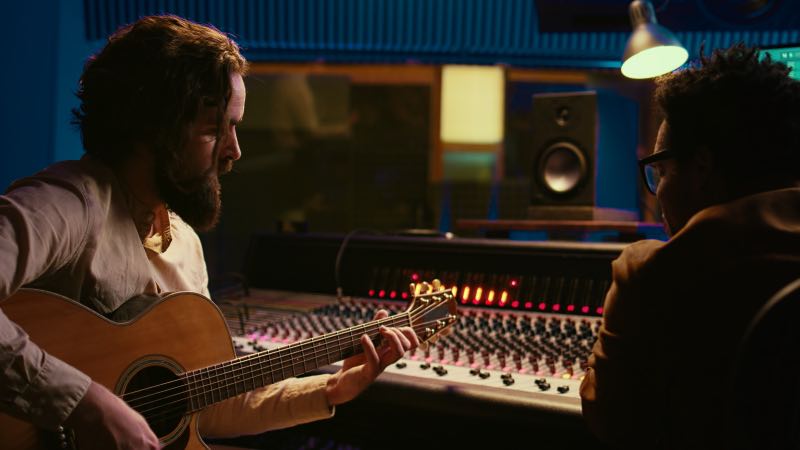
If you're recording the session — even just on a phone propped on the floor — you'll hear things you missed in the room. The balance sounds different. The timing drift that felt fine in the moment is obvious on playback. Three minutes of listening back saves an hour of repeated runs.
Most sessions fall apart here. Energy drops. Someone checks their phone. The last thing you run is usually sloppy, which is what you take home with you.
End deliberately. One clean run of whatever you spent the session fixing. Something that lands. Then stop.
What you finish on is what sticks.
Progress in rehearsal is slow and non-linear. You won't feel it week to week. Months later, something that used to fall apart holds together without anyone remarking on it. That's what consistent, focused sessions build — not one breakthrough, just fewer weak spots over time.
The room is just a room. What you do with the time inside it is the variable.