

Humans have always made music. Every culture, every era, every corner of the world — before recording, before radio, before the internet. Not because anyone told them to. Because something in us needs it.
Playing badly in your living room, singing at karaoke, learning piano at 47 — none of it needs justification. Music processes emotion, builds focus, creates connection, and gives you somewhere to put things that don't fit anywhere else. Some people play for themselves. Some play for a room. Some build careers from it. The spectrum is wide and every point on it is valid.
The further along that spectrum you go, the more it asks of you. Here is the honest picture of what that looks like in 2026.
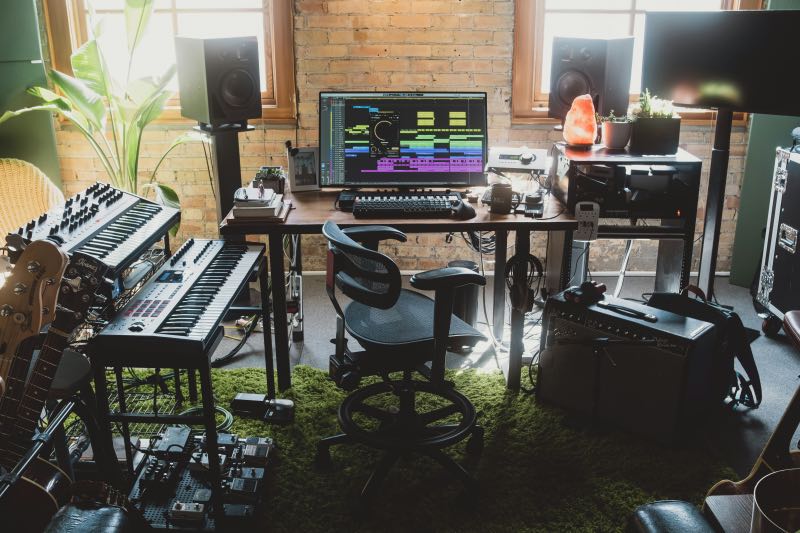
A musician recording at home, releasing independently, and building an audience directly — that is unremarkable now. Twenty years ago it wasn't. The infrastructure that used to sit between a musician and their audience — labels, distributors, radio — still exists, but it no longer controls the door.
The relationship between musician and listener is now more direct than it has ever been. That opened things up. It also meant the work that used to belong to someone else now belongs to you.
The audience relationship is yours to build. Mailing lists, consistent releases, showing up at the same venues over years — none of it is glamorous and all of it compounds. The musicians who sustain something build it slowly, not in bursts.
Knowing where the money is matters. Streaming, sync licensing, live work, teaching, brand partnerships — most working musicians piece income together from several directions. The money is often there. It goes unclaimed because most musicians don't know where to look until it's already gone.
AI is part of the landscape now. The honest position: AI tools are genuinely useful on the production and business side — workflow, marketing, administration, reaching people faster. On the creative side, the more interesting question is what musicians do with these tools rather than whether to use them at all. A human story, a human voice, a room full of people choosing to be in the same place — that hasn't been replaced. Musicians who understand these tools rather than avoid them will be better placed whatever happens next.
The emotional cost is real and usually underestimated. Putting personal work into public view, repeatedly, while income is irregular and comparison is constant — that takes something. The musicians who last tend to treat their own stability as seriously as they treat their craft.
Streaming pays very little per play. Touring costs money before it makes money. Getting heard is harder than it has ever been — not because fewer people are listening, but because more music is being released than anyone can process.
None of this is a reason not to do it. But going in clear is better than going in romantic.
The connections that form around music are unusually real. Fans are not followers. A follower clicked once. A fan comes back, tells someone, remembers where they were the first time they heard it.
Because music is one of the few things humans have always done, across every culture, in every period of history. Whatever form it takes, it persists.
Taking it seriously is harder in some ways and more possible in others than it has ever been. What has not changed is why it matters.